
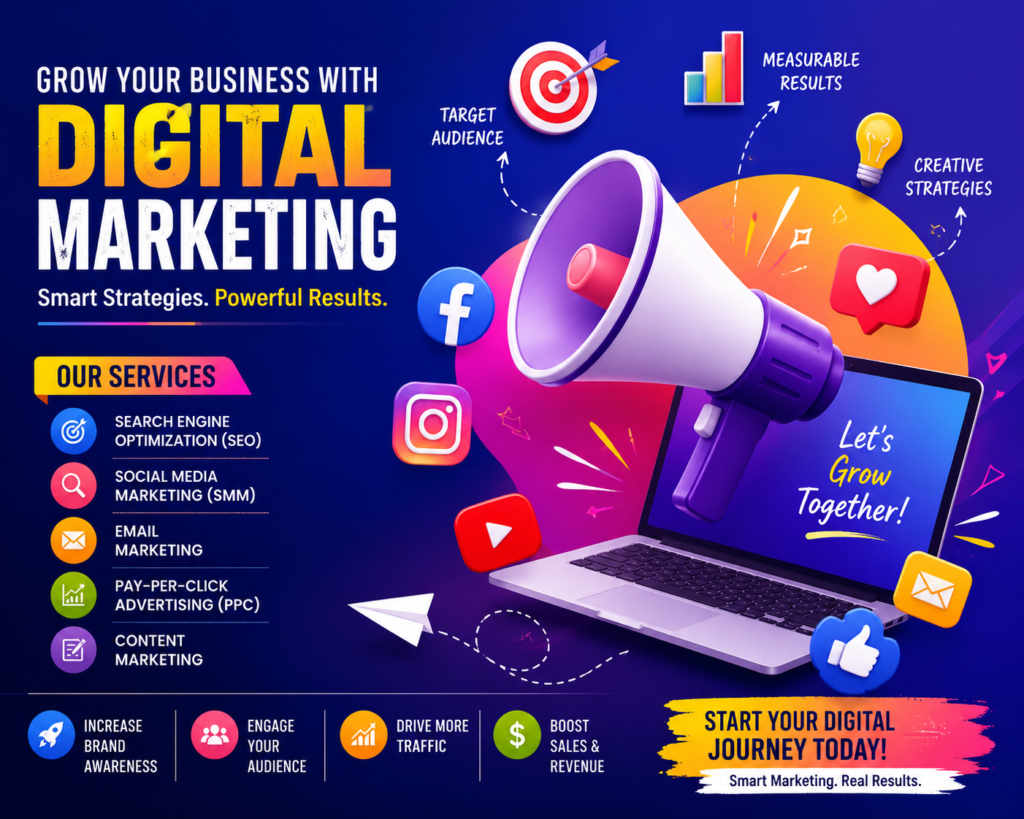
The business landscape has shifted dramatically over the past decade. Today, your customers are online—researching products, comparing prices, reading reviews, and making purchasing decisions without ever stepping into a physical store. If your business isn’t visible in these digital spaces, you’re essentially invisible to a massive portion of your potential market.
Digital Marketing has become the backbone of modern business growth and customer acquisition. Whether you’re running a small local shop or managing a global enterprise, understanding how to connect with your audience through digital channels is no longer optional—it’s essential for survival and growth.
This guide will walk you through the fundamental aspects of digital marketing, from search engine optimization to social media engagement, giving you the knowledge and tools to build a strong online presence that drives real business results.
Why Digital Marketing Matters for Modern Businesses
Understanding Digital Marketing fundamentals is essential for any business looking to thrive online. The traditional marketing playbook—print ads, billboards, radio spots—still has its place, but it can’t match the precision, scalability, and measurability that digital channels offer.
Consider these realities: over 5 billion people use the internet globally, and the average person spends nearly 7 hours online each day. Your potential customers are already spending significant time in digital spaces, consuming content, engaging with brands, and making purchase decisions. The question isn’t whether you should invest in digital marketing—it’s how quickly you can get started and how effectively you can execute.
Successful Digital Marketing requires a strategic approach across multiple channels. Unlike traditional marketing where you cast a wide net and hope for the best, digital marketing allows you to target specific demographics, track user behavior, measure campaign performance in real-time, and adjust your strategy based on actual data. This level of control and insight was unimaginable just two decades ago.
Understanding Online Marketing and Its Core Components
Online Marketing encompasses all promotional activities conducted through internet-based channels. At its core, it’s about meeting your customers where they already spend their time and delivering value through content, engagement, and solutions to their problems.
The beauty of Online Marketing lies in its ability to reach targeted audiences with precision. Instead of paying for a billboard that thousands of uninterested people will see, you can show your message specifically to people who have already expressed interest in products or services like yours. This targeting capability makes digital marketing incredibly cost-effective, especially for businesses with limited budgets.
Effective Online Marketing strategies combine multiple tactics for maximum impact. The most successful businesses don’t rely on a single channel—they build an integrated approach that leverages search engines, social platforms, email, content creation, and paid advertising to create multiple touchpoints with their audience. Each channel serves a specific purpose and works together to guide potential customers through their buying journey.
Essential SEO Strategies to Boost Your Visibility
When someone searches for a product or service you offer, where does your website appear in the results? If you’re not on the first page, you’re missing out on significant traffic and potential customers. Modern SEO Strategies focus on user experience and quality content, moving far beyond the keyword-stuffing tactics of the past.
Implementing proven SEO Strategies helps your website rank higher in search results. Start with keyword research to understand what terms your potential customers are actually searching for. Then, create high-quality content that genuinely answers their questions and solves their problems. Search engines have become incredibly sophisticated at identifying valuable content, so your focus should always be on serving your audience first.
Effective SEO Strategies combine technical optimization with valuable content creation. This means ensuring your website loads quickly, works perfectly on mobile devices, has a clear site structure, and provides an excellent user experience. Technical elements like meta descriptions, header tags, image optimization, and internal linking all contribute to how search engines understand and rank your content.
Don’t overlook local SEO if you serve a specific geographic area. Claiming and optimizing your Google Business Profile, gathering customer reviews, and ensuring your business information is consistent across online directories can dramatically improve your visibility for local searches.
Content Marketing: Creating Value That Attracts Customers
Content Marketing focuses on creating valuable resources that attract and retain customers. Instead of interrupting people with ads, content marketing draws them in by providing genuinely useful information, entertainment, or solutions to their problems.
The foundation of successful Content Marketing is understanding your audience’s needs. What questions do they have? What challenges are they facing? What information would make their lives easier or better? When you answer these questions through blog posts, videos, guides, infographics, or podcasts, you position your business as a helpful resource rather than just another company trying to make a sale.
Content Marketing delivers long-term results by building trust and authority. A well-written blog post can continue attracting visitors and generating leads for years after publication. Video tutorials can establish your expertise and build relationships with potential customers. Case studies and success stories provide social proof that your solutions actually work.
The key is consistency and quality. Publishing mediocre content sporadically won’t move the needle. Instead, develop a content calendar, commit to a regular publishing schedule, and focus on creating resources that are genuinely better than what’s already available on your topic.
Social Media Marketing Tactics That Drive Engagement
Social Media Marketing allows brands to build authentic relationships with their audience. Unlike traditional one-way advertising, social platforms enable real conversations, community building, and direct engagement with customers and prospects.
A well-executed Social Media Marketing strategy can dramatically increase brand awareness. The viral nature of social platforms means that great content can reach far beyond your immediate followers. When people share, comment on, or engage with your posts, their networks see that activity, exponentially expanding your reach.
Social Media Marketing platforms offer unprecedented targeting capabilities for advertisers. Whether you’re using Facebook, Instagram, LinkedIn, Twitter, or TikTok, you can target users based on demographics, interests, behaviors, job titles, and even life events. This precision ensures your message reaches the people most likely to be interested in what you offer.
Here are some Social Media Marketing Tips for Beginners getting started: Choose platforms where your target audience actually spends time rather than trying to be everywhere at once. Focus on providing value through your posts—educational content, entertainment, inspiration, or community building—rather than constant sales pitches. Engage authentically by responding to comments, participating in conversations, and showing the human side of your business.
Following proven Social Media Marketing Tips for Beginners can accelerate your learning curve and help you avoid common mistakes that waste time and resources.
Email Marketing Best Practices for Higher Conversions
Email Marketing remains one of the highest ROI channels in digital advertising. For every dollar spent on email marketing, the average return is around $36—a return that few other channels can match. Despite predictions of its demise, email continues to be a powerful tool for nurturing relationships and driving sales.
Personalized Email Marketing campaigns can significantly boost customer engagement. Modern email platforms allow you to segment your audience based on behavior, preferences, purchase history, and engagement levels. This segmentation enables you to send highly relevant messages that resonate with specific groups rather than generic blasts that get ignored or deleted.
Email Marketing automation allows businesses to nurture leads efficiently. You can set up automated sequences that welcome new subscribers, educate them about your products or services, share valuable content, and guide them toward making a purchase—all without manual intervention for each contact.
The key to successful email marketing is providing value in every message. Your subscribers gave you permission to enter their inbox—a privilege that should never be taken for granted. Make sure each email offers something worthwhile, whether that’s exclusive information, special offers, helpful tips, or entertaining content. Build trust by being consistent, honest, and respectful of their time and attention.
Implementing Effective Marketing Strategies for Your Business
Developing integrated Marketing Strategies ensures all channels work together effectively. The most successful digital marketing doesn’t happen in silos—your SEO efforts should support your content marketing, which should feed your social media, which should build your email list, which should drive sales and customer loyalty.
Data-driven Marketing Strategies help businesses allocate resources more efficiently. One of digital marketing’s greatest advantages is measurability. You can track exactly how many people saw your content, clicked your links, visited your website, and completed desired actions. This data allows you to identify what’s working, what’s not, and where to invest more resources for better results.
Successful Marketing Strategies adapt to changing consumer behaviors and market trends. What worked last year might not work today. Stay informed about platform updates, algorithm changes, emerging technologies, and shifting consumer preferences. Be willing to experiment with new approaches while maintaining the core strategies that consistently deliver results.
Best Digital Marketing Strategies for Small Businesses on a Budget
The Best Digital Marketing Strategies for Small Businesses focus on cost-effective, high-impact tactics. You don’t need a massive budget to compete effectively online—you need smart strategy and consistent execution.
Small business owners can compete effectively by implementing the Best Digital Marketing Strategies for Small Businesses: Start with a strong foundation of SEO-optimized website content that answers your customers’ questions. Build an email list from day one and nurture those relationships consistently. Choose one or two social platforms where your audience is active and commit to showing up regularly with valuable content. Create content that showcases your expertise and helps potential customers solve problems.
Focus on local SEO if you serve a specific geographic area—this is often less competitive and more immediately profitable than trying to rank nationally. Encourage satisfied customers to leave reviews, as social proof is incredibly powerful for small businesses. Consider strategic partnerships with complementary businesses to expand your reach without expanding your budget.
Moving Forward with Your Digital Marketing Journey
The digital marketing landscape can feel overwhelming, especially when you’re just getting started. The good news is that you don’t need to master everything at once. Start with the fundamentals—a well-optimized website, quality content that serves your audience, and one or two channels where you can consistently engage with potential customers.
Remember that digital marketing is a marathon, not a sprint. Building online visibility, establishing authority, and creating a steady stream of qualified leads takes time and consistent effort. The businesses that succeed are those that commit to the long game, continuously learning, testing, and refining their approach based on real results.
The most important step is simply to begin. Choose one strategy from this guide—whether that’s improving your SEO, starting a blog, launching an email newsletter, or building your social media presence—and commit to it for the next 90 days. Track your results, learn from the data, and adjust your approach as needed.
Your customers are online right now, searching for solutions that your business can provide. The question is: will they find you, or will they find your competitors? The answer depends on the digital marketing decisions you make today.